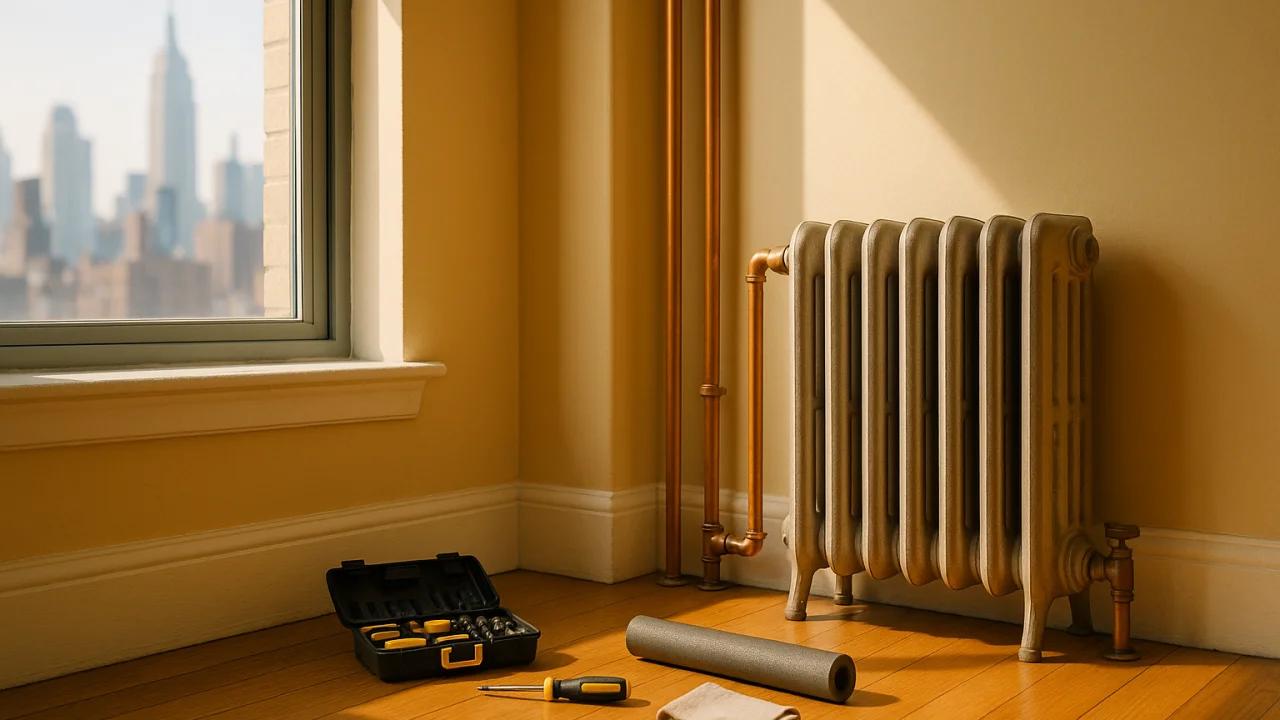
Many New Yorkers still rely on older steam or hot-water radiator systems. They can be durable and comfortable, but they also need specific care to stay efficient, safe, and quiet. This guide explains what to check yourself, what to schedule before heating season, safety precautions, and clear signs that it’s time to call a professional.
Understand the system in your unit
NYC apartments usually have one of two common systems: steam (one-pipe or two-pipe) and hot-water (hydronic). Steam radiators heat quickly and often hiss or clank; hot-water radiators are quieter but need proper pressure to circulate. Knowing which you have shapes the maintenance steps and the types of technicians you should hire.
Simple checks you can do yourself
- Listen for unusual sounds: Continuous banging, hammering, or persistent hissing can indicate trapped air, worn vents, or pressure issues.
- Look for cold spots: If the radiator is warm at one end and cold at the other, it may need balancing, bleeding (hot-water systems), or vent replacement (steam systems).
- Inspect valves and visible pipes: Check for leaks, loose nuts, rust, or wet spots around connections and supply lines.
- Check pressure and boiler lights: For in-unit boilers, confirm the pressure gauge is in the normal range and pilot/indicator lights are steady.
- Feel for drafts: Poor window seals or cold exterior walls near radiators reduce effectiveness — weatherproofing can improve comfort without touching the heating system.
Seasonal prep and simple maintenance
- Start-of-season inspection: Before the first cold spell, run the system briefly to detect leaks, odd smells, or strange noises while a technician is still available.
- Bleed radiators: Hot-water systems often need bleeding to remove trapped air so they heat evenly. Use a radiator key or screwdriver and a small towel or container to catch drips.
- Replace faulty air vents: Steam radiators rely on vents to let air out. If vents fail, radiators won’t fill with steam properly and will stay cold or noisy.
- Insulate pipes: Exposed supply pipes that run through unheated spaces lose heat. Foam insulation sleeves are an inexpensive fix.
- Add reflective foil: Tacking heat-reflective material behind radiators on exterior walls can reduce heat loss and make rooms feel warmer.
When to call a professional
- Persistent leaks: Any recurring wetness around valves, joints, or the boiler requires a licensed plumber or HVAC tech.
- Boiler won’t maintain pressure: Repeated pressure drops or pressure that’s consistently too high can signal a failing component or leak in the system.
- Strong gas smell or CO alarm: Evacuate and call emergency services and your building manager immediately if you smell gas or a carbon monoxide alarm sounds.
- Major noise changes: Loud hammering, banging, or knocking that persists after simple fixes usually indicates trapped water, bad vents, or circulation problems needing professional diagnosis.
- Age and replacement considerations: If a boiler is decades old and requires frequent repairs, replacement by a licensed contractor may be more cost-effective in the short term.
Hiring the right technician in NYC
Look for technicians licensed for gas and hydronic systems, with experience on steam radiators if that’s what your building uses. Ask about experience with multi-unit buildings, whether they're insured, and typical turnaround for emergency calls. For tenants, coordinate through your landlord or building manager so property-level work follows building policy.
Tenant and landlord responsibilities
Responsibilities vary by lease and building. Tenants usually handle minor in-unit tasks like bleeding radiators and preventing obstructions; landlords or building management are typically responsible for boiler maintenance, major repairs, and code compliance. Keep written records of reported issues and repairs for both safety and future disputes.
Safety basics
- Never paint over steam vents or block radiator inlets.
- Keep flammable materials away from boilers and hot surfaces.
- If you suspect carbon monoxide or gas, evacuate and alert professionals immediately.
- When bleeding radiators, use a cloth to avoid burns from hot water or steam.
Small upgrades that improve comfort and efficiency
- Thermostatic radiator valves: Let you control heat room-by-room.
- Programmable thermostats: Save energy when rooms are unoccupied.
- Radiator covers with proper clearance: Improve appearance without reducing output if designed correctly.
With a little seasonal attention and a sensible relationship with qualified technicians and building management, older NYC boiler and radiator systems can remain efficient, safe, and comfortable for years. Regular checks, prompt repairs, and basic safety practices are the keys to staying warm without surprises.