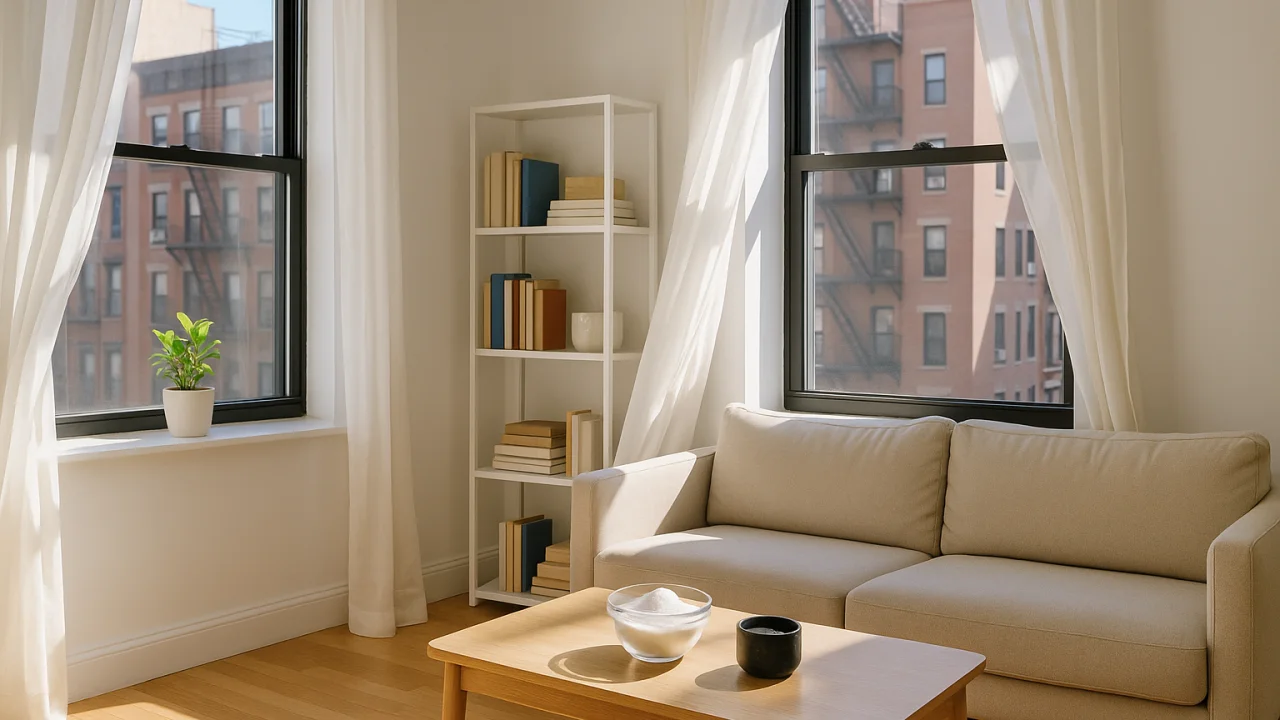
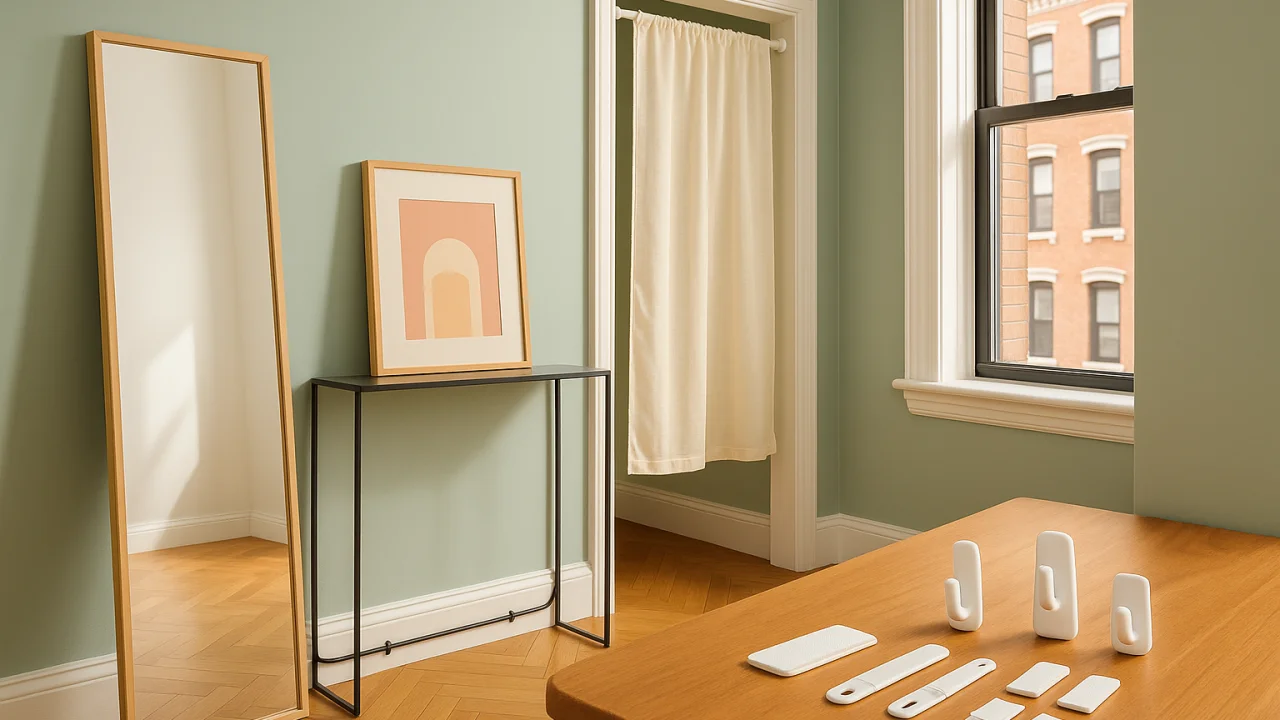
Making a New York apartment feel like yours often means putting art, mirrors, shelves and hooks on the walls. If you want to avoid nail holes (and lease disputes), there are reliable, low-damage methods that work across drywall, plaster, brick and tile. This guide helps you choose the right approach for the weight, surface and style of the piece you want to hang.
Quick weight-and-method cheat sheet
- Very light (under ~2 kg / 4–5 lb): small adhesive strips, removable hooks, adhesive cable clips.
- Light (2–7 kg / 5–15 lb): heavy-duty adhesive strips or hooks, small picture hooks into studs if available.
- Medium (7–15 kg / 15–35 lb): picture hooks in studs, picture-hanging rails, or tension-based supports; avoid relying on adhesives alone on textured or plaster walls.
- Heavy (over ~15 kg / 35 lb): consider professional mounting or landlord permission; lean large mirrors or use freestanding furniture anchored with anti-tip straps.
Check your surface before committing
- Painted drywall: adhesive strips usually work well on smooth painted surfaces but avoid if paint is flaking.
- Plaster (common in pre-war NYC): can be brittle. Adhesives may pull surface material off; prefer hooks into studs or ask the superintendent.
- Textured walls: adhesives often fail on heavy textures—use hooks or rails.
- Brick or tile: adhesives can stick but lifecycle depends on grout and seal; removable masonry hooks exist, but drilling may be required for heavy items.
- Wallpaper: adhesives may lift paper; test in a hidden spot or use freestanding solutions.
Non-damaging hanging methods and when to use them
- Peel-and-stick mounting strips and removable hooks: Best for frames, clocks, and small mirrors on smooth painted walls. Look at the weight rating and follow surface prep instructions exactly.
- Tension rods and curtain springs: Great for hanging lightweight curtains, fabric art, or even temporary shelving near windows without drilling into plaster.
- Over-the-door hooks and organizers: Ideal for entryways and bathrooms to hold keys, towels, and bags without touching walls.
- Leaning furniture and mirrors: For heavy mirrors or art, lean them on a console or bookcase and secure with an anti-tip strap for safety.
- Picture rails and museum wire systems: If your building has a picture rail, use that. If not, consider a removable rail mounted with minimal fasteners in less visible places—ask the landlord.
- Adhesive cable clips and cord organizers: Keep cables tidy and tacked along baseboards or behind furniture.
Step-by-step: hanging a frame without nails
- Plan the layout and mark positions with painter’s tape—this avoids marking walls directly.
- Clean the surface with rubbing alcohol and let it dry completely; dust reduces adhesive strength.
- Use mounting strips or hooks rated for at least the weight of the frame. Attach as instructed and press firmly for the recommended time.
- Hang and check alignment. Re-check after 24–48 hours to make sure adhesion holds.
Safe removal and repair
- Warm the adhesive with a hair dryer to soften it, then pull straight down slowly at a low angle when removing strips. Some adhesives come off clean if removed as directed.
- For stubborn adhesive residue, rubbing alcohol or a mild adhesive remover works; test in an inconspicuous spot first.
- If you end up with small holes from hooks, use a tiny amount of spackle, let dry, sand smooth and touch up paint. Keep photos of the original condition and repairs—it helps with deposit conversations.
Practical NYC tips
- In older pre-war buildings with plaster and lathe, ask your building super before trying heavy adhesives—plaster can crumble or delaminate.
- If you’re in a co-op or have building-specific rules, check them first; some boards limit visible hardware changes.
- For quick local purchases, neighborhood hardware stores and weekend markets carry a range of removable hanging solutions; staff can often advise based on wall type.
- For anything that could be a safety risk (large mirrors, heavy shelving, TVs), get permission and professional help if needed.
Hanging things in a rental in New York doesn’t have to mean holes and headaches. With the right assessment of weight and surface, careful preparation, and the right product choices, you can personalize your space while keeping your walls and your landlord happy. When in doubt, lean heavy items or consult building staff to protect plaster, paint and your security deposit.