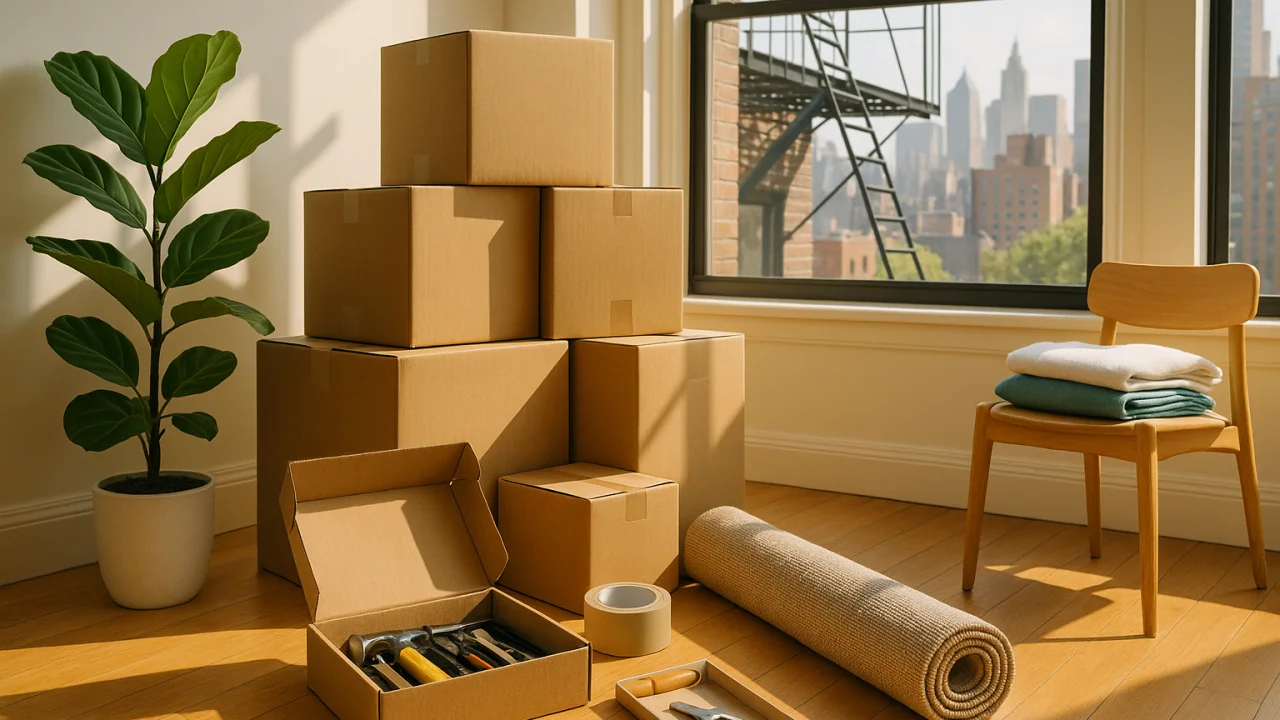
Moving in in New York can feel like a small operation: logistics, building rules, tight stairwells, and last-minute needs. This guide walks through what to do before, on, and after move-in so you can turn chaos into a functioning home in the first 72 hours.
Before move day
- Confirm building logistics: Reserve the elevator, note loading zone rules, check move-in hours and any required permits or building escorts.
- Schedule utilities and internet: Set start dates for electricity, gas, and internet. For busy providers, book appointments well in advance.
- Prepare a essentials box: Include keys, charger, phone, wallet, basic tools, toilet paper, trash bags, a small first-aid kit, paper towels, a change of clothes, and a few dishes.
- Take photos of the apartment before moving items in. Document existing damage and share with the landlord to avoid disputes.
- Buy renter's insurance: It’s quick, affordable, and protects your stuff during and after the move.
Day of the move
- Arrive early to brief movers and confirm access paths; measure tight corners and doorways. Protect floors and walls with drop cloths if allowed.
- Get keys and access codes first. Double-check that locks, mailboxes, and building entry systems work.
- Do a quick utilities check: Turn on the heat/cool systems, run a tap to check water, test light switches and outlets (use phone flashlight to see if bulbs are dead).
- Unpack essentials first: bedding, toiletries, basic kitchen items, and the essentials box. Prioritize a comfortable sleeping setup for the first night.
- Inspect appliances and report any issues immediately to the landlord or management in writing.
First 72 hours
- Set up internet and streaming: If the provider needs an in-home appointment, have your preferred router ready and confirm the modem location.
- Locate building contacts: Get phone or text details for the super, building manager, and emergency contacts. Introduce yourself briefly if building etiquette allows.
- Find the basics nearby: Nearest grocery, pharmacy, laundromat, and subway/commute route. A quick walk at day two helps with orientation and safety.
- Register mail forwarding and update critical accounts with your new address. Track package delivery rules for mailrooms or doormen if applicable.
- Sort trash and recycling: Learn your building's schedule and DSNY rules for bulk items. Avoid leaving boxes in hallways—break them down and store for scheduled pickup.
Essential tools and quick fixes
- Basic toolkit: hammer, screwdriver set, adjustable wrench, pliers, utility knife, measuring tape, level, and a small flashlight.
- Fast hardware: extra hooks, command strips, outlet covers, and a multi-outlet power strip with surge protection.
- Pest prevention: keep food sealed, check window seals, and address any signs of pests immediately with the super or landlord.
Local hacks and community resources
- Ask your neighbors or super for the best local cleaners, handymen, and grocery deliveries. Word of mouth is often faster than online searches.
- Neighborhood Facebook groups and community boards are good for urgent recommendations and local rules.
- 311 and city services are useful for reporting hazardous conditions, noisy construction curfews, or public space issues.
Handling problems and landlord interactions
- Document every repair request in writing and keep copies of photos. Follow up if response times slip.
- Know basic tenant rights in your building: emergency repairs like major leaks and no heat are typically landlord responsibilities and may need prompt escalation.
Final checklist before you sleep on night one
- Keys and access confirmed
- Essentials box unpacked
- Utilities and internet functioning or scheduled
- Building contacts saved
- Trash/recycling plan known
With the right prep and a few neighborhood hacks, moving into a New York apartment becomes manageable instead of overwhelming. Prioritize safety, documentation, and the essentials so you can enjoy your new space sooner.